What is hybrid rendering in Next.js?
Hybrid rendering in Next.js is an approach where the same page combines several rendering strategies: server components, client components, static generation, and dynamic rendering.
In other words: Next.js lets you flexibly choose where and how to render each part of the app, instead of using one method for everything.
Short definition (for an interview)
Hybrid rendering is Next.js's ability to:
- render part of the page on the server
- part - in the browser
- part - ahead of time (static)
- part - on request (dynamic)
all of this within a single page.
What this looks like conceptually
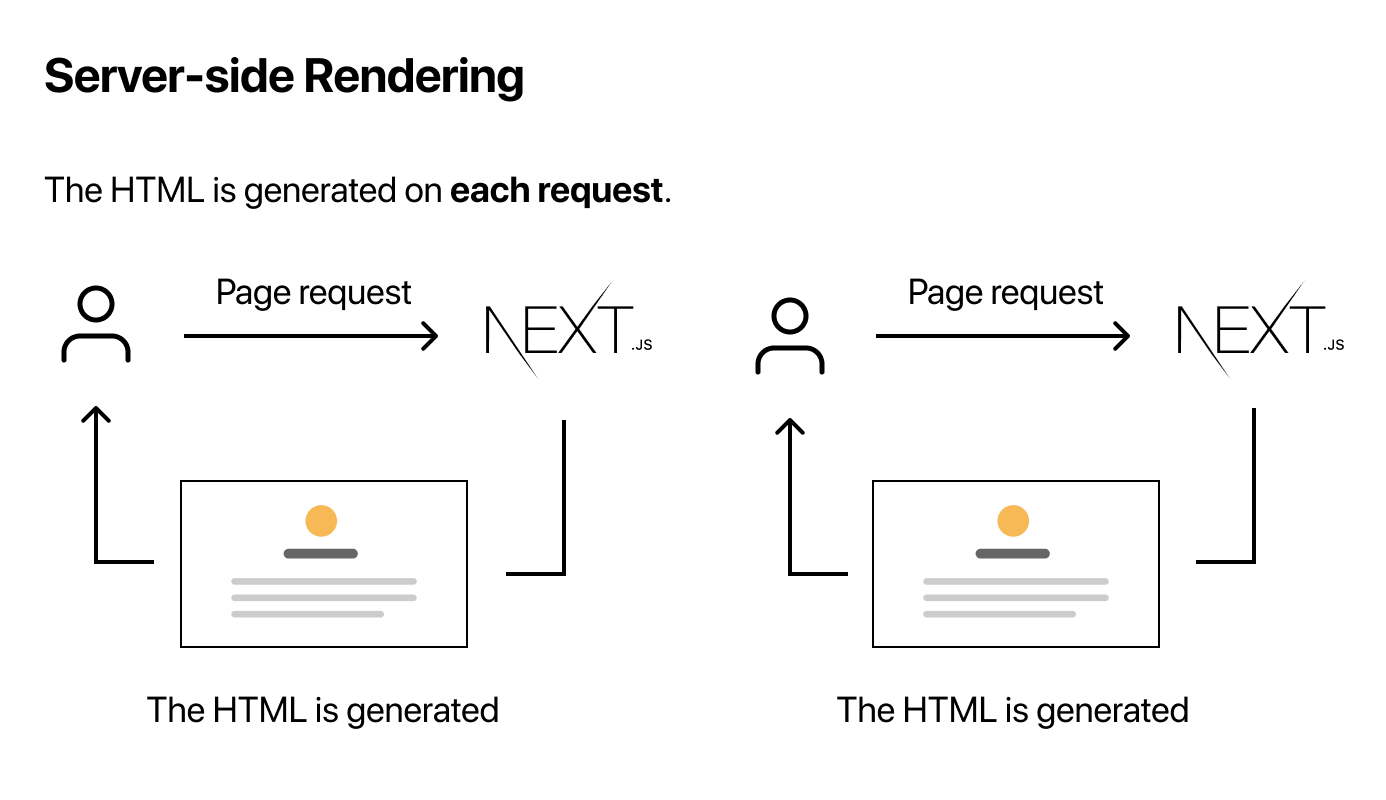


A single page can consist of:
- a server layout
- a server component with data
- a client component for interactivity
A simple hybrid page example
tsx
// Server Component (page.tsx)
import Counter from './Counter'

export default async function Page() {
  const products = await getProducts()

  return (
    <>
      <h1>Products</h1>
      <ProductList products={products} />
      <Counter />
    </>
  )
}
tsx
// Client Component
'use client'
import { useState } from 'react'

export default function Counter() {
  const [count, setCount] = useState(0)
  return <button onClick={() => setCount(count + 1)}>{count}</button>
}- data and the list - server
- the counter - client
- the user gets ready HTML + minimal JS
What approaches make up hybrid rendering
1. Server and client components
- Server Components - data and structure
- Client Components - interactivity
2. Static generation (SSG)
The page is generated at build time.
Suited for:
- blogs
- landing pages
- documentation
ts
export const revalidate = 603. Dynamic rendering (SSR)
HTML is created on every request.
Suited for:
- personalized pages
- authenticated users
4. Incremental regeneration (ISR)
A combination of SSG + SSR:
- HTML is cached
- periodically updated
Why it's called "hybrid"
Because Next.js does not force you to pick just one:
- not "all SSR"
- not "all SPA"
- not "all SSG"
You can combine everything at once - wherever it makes sense.
Why hybrid rendering is needed
Performance
- less JS
- fast first render
SEO
- HTML is available immediately
UX
- interactivity where it's needed
Scalability
- easier to optimize large applications
Short Answer
Interview readyPremium
A concise answer to help you respond confidently on this topic during an interview.